
Metabolic Syndrome May Be Associated With Poor Oral Health: Study
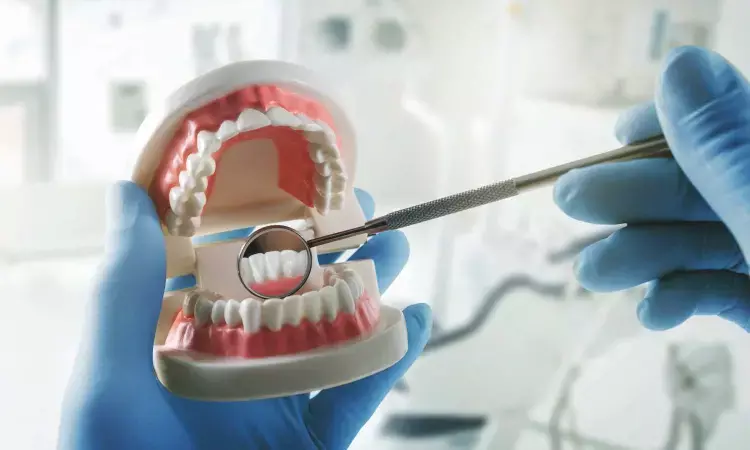


According to a new study, metabolic syndrome was linked to compromised oral health, reflected by higher rates of dental caries and periodontal disease. Although differences in serum vitamin D levels and salivary antimicrobial peptides were not statistically significant, the results suggest altered host defense mechanisms in individuals with metabolic syndrome. The findings highlight the need for larger longitudinal studies and underscore the importance of routine oral screening and strong oral health policies to promote overall well-being in both metabolic and non-metabolic populations.
Oral diseases such as caries and periodontitis are complex, multifactorial diseases and remain the most prevalent worldwide. Both diseases are associated with vitamin D deficiency (VDD) and its pathophysiological process. The prevalence of metabolic syndrome (MetS) is rising in developing countries, and studies have shown that oral diseases are more prevalent among the metabolic group.
This study aims to assess and correlate the relationship between serum vitamin D levels, salivary antimicrobial peptides (AMPs), and their role in oral health. A total of 80 individuals aged 35–75 years were recruited, including 40 patients in the metabolic syndrome group, following the National Cholesterol Education Program Adult Treatment Panel III (NCEP ATP III) criteria, and 40 in the non-metabolic group. Serum vitamin D levels and salivary AMPs were estimated using enzyme-linked immunosorbent assay (ELISA). Oral health status was assessed using the Decayed, Missing, Filled Teeth (DMFT) index and by recording the presence or absence of periodontal pockets. The data obtained were subjected to statistical analysis to determine correlations between systemic status, biochemical markers, and oral health parameters.
Results: The Mann–Whitney U test was applied to compare continuous variables between the metabolic and non-metabolic groups, as well as between subgroups. The chi-squared test was applied to assess associations between categorical variables. Patients with metabolic syndrome exhibited reduced serum vitamin D levels, although differences were not statistically significant. Salivary β-defensin and cathelicidin levels were relatively higher in the metabolic group, but without significant intergroup variation. A higher DMFT score and greater prevalence of periodontal pockets were recorded among metabolic syndrome patients compared with non-metabolic individuals.
Within the study's limitations, a potential link between metabolic syndrome and compromised oral health was observed, as demonstrated by increased caries incidence and periodontal involvement. While variations in serum vitamin D and salivary AMPs did not achieve statistical significance, the findings suggest an altered host defense mechanism in metabolic syndrome patients. Larger, longitudinal studies are required to further elucidate these associations and emphasize the importance of routine oral screening in individuals with metabolic disorders, and the implementation of oral health polices is mandatory to maintain good oral health and well-being among both metabolic and non-metabolic populations.
Reference:
Shivakumar, A. T., Neelambike, S. M., Shettar, S. R., Megha, G. K., Kalgeri, S. H., Shiragannavar, V. D., Gowda, N. G. S., Dhakshaini, M. R., Prasad, K., & Santhekadur, P. K. (2025). Exploring the interplay of vitamin D, salivary antimicrobial peptides, and cytokines in oral immunity and disease prevention: An insight for implications in oral health policy. Frontiers in Oral Health, 6, Article 1694969. https://doi.org/10.3389/froh.2025.1694969