Supreme Court examines mandatory NAT testing in blood banks

Supreme Court of India


New Delhi: Amid growing concerns over complications arising from blood transfusions and recent cases where children reportedly contracted HIV through contaminated blood, the Supreme Court has decided to examine whether blood banks across the country should mandatorily conduct the Nucleic Acid Test (NAT) to strengthen blood safety standards.
A Bench comprising Chief Justice of India Surya Kant and Justices Joymalya Bagchi and Vipul M. Pancholi raised concerns about the feasibility and cost implications of making NAT compulsory. The court asked advocate A. Velan, appearing for the petitioner, NGO Sarvesham Mangalam Foundation, to address the cost-effectiveness of NAT compared to the widely used Enzyme-Linked Immunosorbent Assay (ELISA) test.
The Chief Justice specifically questioned whether all States would be financially equipped to implement NAT in government blood banks and hospitals.

According to a report by The Hindu, the Bench asked whether States already facing financial constraints would be able to bear the additional expense. When counsel submitted that the cost of NAT was comparatively low, the Bench responded, “Delhi can afford it. In States who are struggling hard to pay the salaries of their employees or are unable to pay their electricity charges… would this be another financial burden on them?”
The court directed the petitioner to conduct further research on whether State hospitals are currently using NAT, in how many hospitals, and in which States. The petitioner has been asked to file an affidavit placing these details on record. The matter has been posted for further hearing on March 13.
The petition argued that access to safe blood transfusion forms an integral part of the right to life under Article 21 of the Constitution. It places emphasis on NAT as a more sensitive and safer testing mechanism to ensure an infection-free blood supply to recipients. For clinicians dealing with multi-transfused patients, this distinction is not merely technical but directly linked to patient outcomes.
The plea highlighted the vulnerability of Thalassemia patients, who require frequent transfusions and therefore face repeated exposure risks. The petition described such medical mishaps as “preventable tragedies”.
The petition noted, “Thalassemia is an inherited blood disorder which is caused by the body’s inability to produce enough haemoglobin, the protein in red blood cells that transports oxygen from the lungs to the tissues and carbon dioxide to the lungs. As India is the Thalassemia capital of the world, there is a need to strengthen blood safety practices across the country…particularly the need for a standardised test to screen blood donations.”
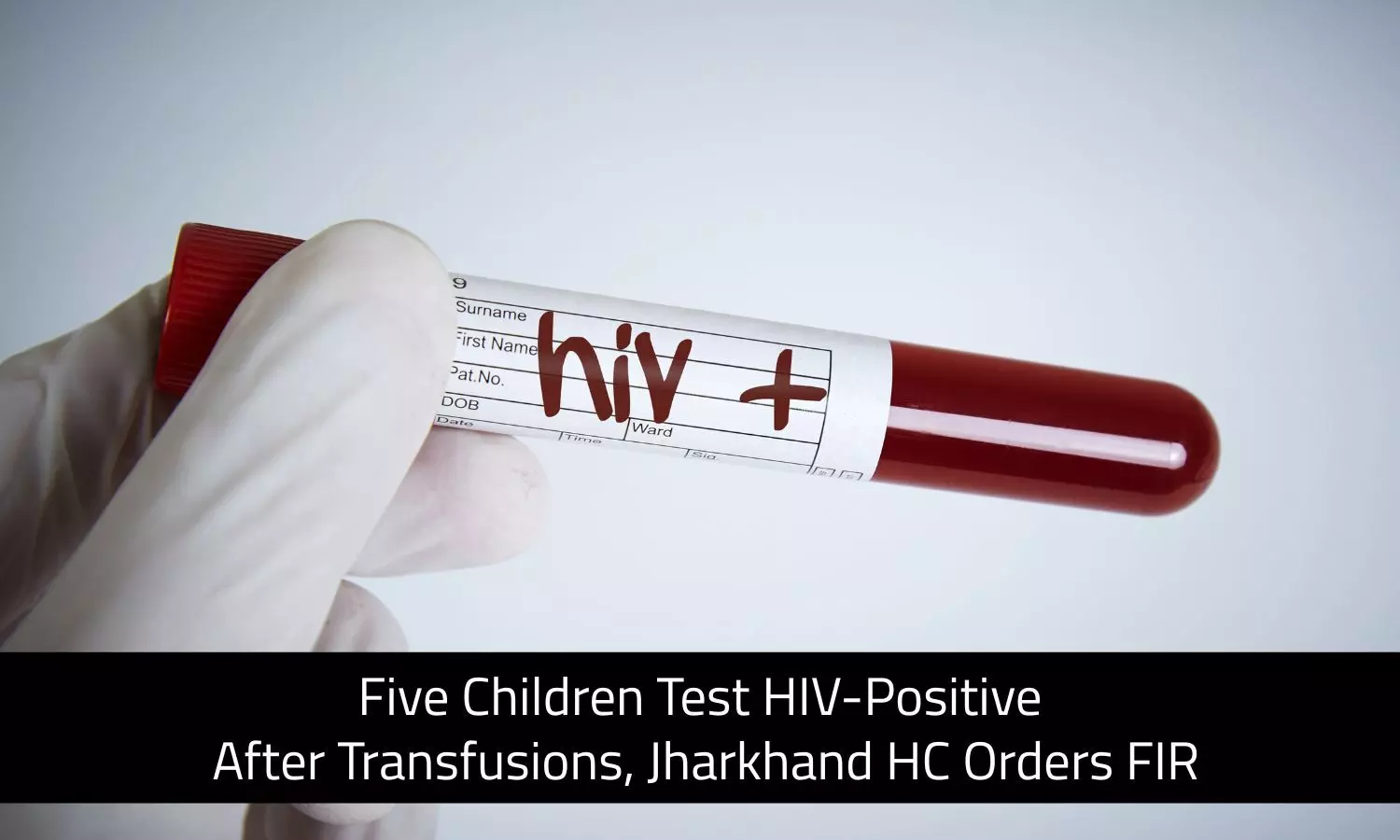
The case gains urgency in light of recent incidents. In December 2025, at least six children in Satna district of Madhya Pradesh were reportedly found HIV positive, allegedly after receiving contaminated blood transfusions at a district hospital during treatment for Thalassemia. In another instance from October last year, the family of a seven-year-old Thalassemia patient alleged that a local blood bank in Chaibasa, West Singhbhum district, had transfused HIV-infected blood.