
Coronary Injury Prevention: IHJ, 2025 Study Introduces Floating Aortic Wire Technique
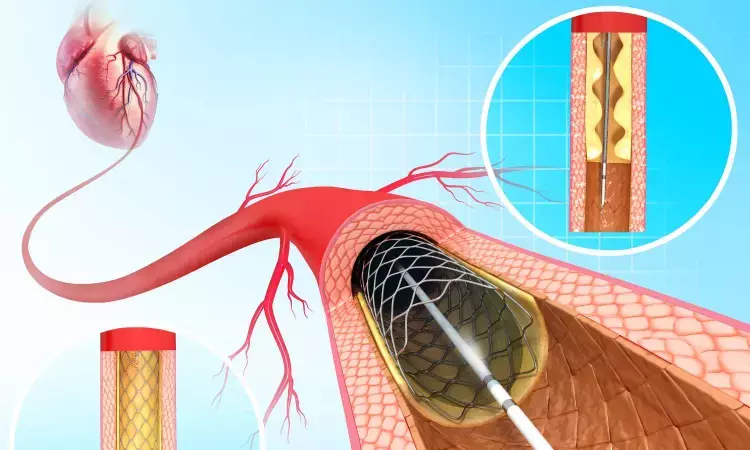


A recent clinical study has demonstrated that a novel "floating aortic wire" technique successfully prevents deep guide engagement in 92% of cases during complex cardiac procedures. This method addresses the risk of iatrogenic coronary injury, which occurs when guide catheters are inadvertently pulled deeper into the artery during the retrieval of intervention devices.
These findings are published in September 2025, in the Indian Heart Journal.
The Clinical Challenge of Guide-Related Dissections
During a Percutaneous Coronary Intervention (PCI), the guide catheter often experiences an inward force when devices like balloons or stents are being withdrawn. This undesired movement, known as deep intubation, is a major cause of catheter-induced dissections, which are responsible for approximately one-third of iatrogenic coronary injuries. Because these injuries typically occur in the proximal segments of the coronary system, they put a large area of the myocardium at risk and can lead to severe outcomes like myocardial infarction. Despite the danger, systematic preventive strategies have historically been lacking for these complex procedures.
Study Overview
The single-center, observational study evaluated the safety and feasibility of using a floating wire to stabilize the guide catheter in 25 patients where conventional methods had failed. The participants all required revascularization for significant coronary artery stenosis and remained hemodynamically stable throughout the process. The technique involves placing a standard 0.014-inch workhorse coronary guidewire in a "floating" position within the aortic sinus. This wire acts as an anchor, preventing the guide catheter from being sucked into the coronary ostium when resistance is encountered during device retrieval. Following the procedures, researchers used intravascular ultrasound (IVUS) to check for any signs of vessel wall damage or intramural hematoma.
The key findings from the study include:
- Successful retrieval without deep engagement of the guide was achieved in 92% of the patient procedures (23 out of 25 cases).
- The Left Anterior Descending (LAD) artery was the most common vessel involved, accounting for 60% of the cases requiring this technique.,
- The stent balloon was the device most frequently associated with retrieval difficulties (60%), followed by jailed wires (20%) and non-compliant balloons (16%).,
- Post-procedure imaging via IVUS confirmed zero instances of ostio-proximal dissection when the floating wire was utilized.
Clinical Relevance and Targeted Prevention
For interventional cardiologists, this study introduces a simple, inexpensive, and reliable strategy to mitigate one of the most feared complications of complex PCI. The high success rate (92%) suggests that the floating aortic wire provides the necessary support to overcome the friction encountered in calcified vessels or bifurcation lesions. The fact that no vessel injuries were detected by IVUS underscores the safety of the procedure. While long jailed wires or long stent balloons in the Right Coronary Artery (RCA) may still present challenges, this technique represents a major step forward in procedural safety. Overall, adopting this proof-of-concept method requires no additional specialist skills and can be easily integrated into daily practice to prevent avoidable iatrogenic injuries.
Reference:
Gawalkar AA, Vijayvergiya R, Karki P. Floating wire assisted device retrieval-a novel technique for prevention of guide-related coronary injury. Indian Heart Journal. 2025 Sep 4.