
Optimizing Paediatric Ureteral Stone Detection: Ultrasound First, CT Only When Needed, says study
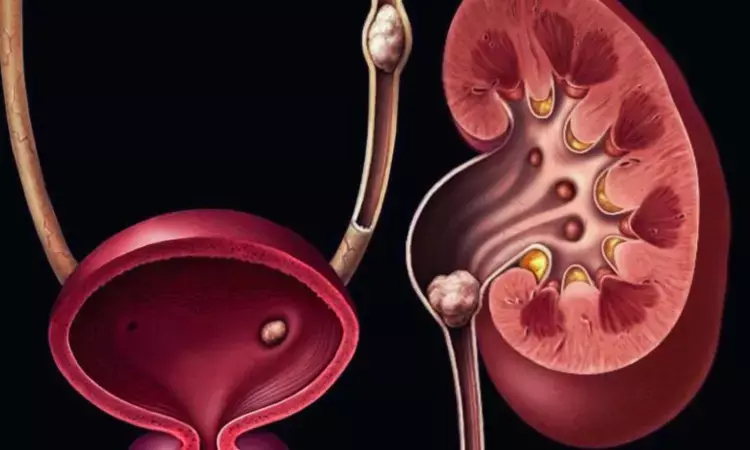


Researchers have found in a new study that Ultrasound remains a valuable first-line imaging tool for detecting urinary stones in children, but has limited sensitivity, especially for ureteral stones. CT should be used selectively, only when ultrasound results are inconclusive or clinical suspicion persists, to ensure accurate diagnosis while minimizing radiation exposure. The study was published in the Pediatric Nephrology journal by Adem Y. and colleagues.
From June 2023 to 2025, 47 pediatric patients (between 0 and 18 years) who underwent both ultrasonography and non-contrast CT for suspected urinary tract calculi were retrospectively analyzed. Separate diagnostic performance parameters of sensitivity, specificity, positive predictive value (PPV), and negative predictive value (NPV) were calculated for kidney and ureteral stones. The predictive value of secondary ultrasonographic findings, including hydronephrosis and ureteral dilatation, for identifying CT-confirmed calculi was assessed using logistic regression analysis. This approach provided the opportunity for objective evaluation of the limitations and strengths of US at different anatomical locations within the urinary tract.
Results
Overall analysis demonstrated that the US had a sensitivity of 57.1% and specificity of 84.8% for kidney calculi, with a PPV of 60.0% and an NPV of 82.4%.
The false-negative rate for kidney stones was very high at 42.9%, with a large number of calculi not detected on US but confirmed on CT. Performance was even more limited for ureteral calculi, where sensitivity was described as very low, indicating poor detection capability at this site.
Hydronephrosis represented a significant secondary indicator of ureteral calculi, increasing the presence of stones in question almost seven times, with an odds ratio of 7.02 and a 95% confidence interval of 1.25-39.40 (p = 0.027).
Hydronephrosis had no predictive value for renal calculi. Ureteral dilatation was not found to be significantly associated either with renal calculi (OR 0.34, 95% CI 0.03-3.18; p = 0.349) or with ureteral calculi (OR 0.57, 95% CI 0.06-5.41; p = 0.628), thus being of limited use for guiding diagnostic decisions based on this parameter.
Ultrasonography remains a helpful first-line imaging modality for suspected pediatric urinary calculi; it is, however, characterized by limited sensitivity, especially in the case of ureteral stones, with a relatively high false-negative rate. CT is usually indicated in clinically suspected cases with inconclusive or negative US findings, or in the presence of secondary signs such as hydronephrosis, which may indicate obstruction. This approach provides an accurate diagnosis while avoiding unnecessary radiation in children and allows appropriate, clinically effective decision-making.
Reference: