
Incidental Findings on low dose CT lung cancer screening May Signal Risk of Hidden Cancers: JAMA
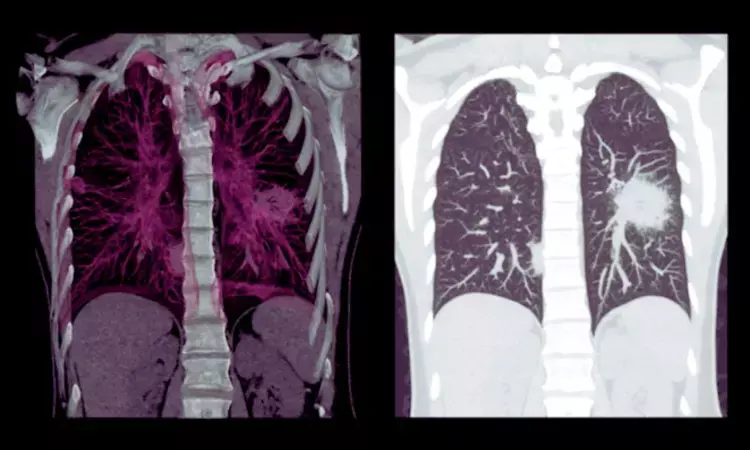


A retrospective cohort study published in the Journal of the American Medical Association found significant incidental findings on low-dose CT lung cancer screening which are linked to an increased risk of detecting extrapulmonary cancers within the following year. The risk was particularly higher for urinary cancers, lymphoma, and leukemia. These findings suggest that such incidental abnormalities should be carefully evaluated as possible indicators of previously undiagnosed cancers.
Low-dose computed tomography (LDCT), widely used to screen high-risk individuals for lung cancer, often reveals abnormalities in other parts of the body. While many of these findings are benign, some may hint at cancers outside the lungs. Until now, it has been unclear whether these incidental findings carry meaningful predictive value.
This study focused exclusively on participants in the LDCT arm of the National Lung Screening Trial (NLST), which was conducted between 2002 and 2009. The analysis included more than 75,000 screening rounds among over 26,000 individuals aged 55 to 74, all considered at high risk for lung cancer due to smoking history.
This research identified cancer-related incidental findings, referred to as “significant incidental findings” (SIFs) in about 3% of screening rounds. These findings appeared in nearly 7% of participants across three rounds of screening.
Among those with cancer SIFs, approximately 3% were diagnosed with an extrapulmonary cancer within one year of the scan. After adjusting for various factors, the study found a significant increase in risk, which was about 14 additional cancer cases per 1,000 individuals with such findings when compared to those without.
Cancers of the urinary system showed the highest increased risk, followed by hematologic cancers such as lymphoma and leukemia. These patterns suggest that some incidental findings may not be random but instead early indicators of underlying disease.
Now, incidental findings are often handled inconsistently, with some receiving follow-up and others dismissed as low priority. This study suggests a more systematic approach may be warranted, especially when findings are potentially linked to malignancy.
However, not all incidental findings indicate cancer, and unnecessary follow-up testing can lead to patient anxiety, additional costs, and potential harm from invasive procedures. Further studies are needed to refine guidelines and determine how to integrate incidental findings into cancer detection strategies.
Source:
Gareen, I. F., Gutman, R., Thangarajah, M., Trivedi, A. N., Tailor, T. D., Flores, E., Chiles, C., Sicks, J., & Hoffman, R. M. (2026). Significant incidental findings in the National Lung Screening Trial and diagnosis of extrapulmonary cancer. JAMA Network Open, 9(3), e263398. https://doi.org/10.1001/jamanetworkopen.2026.3398