
Dual Costimulatory Blockade Improves Immunosuppression as a Non-Calcineurin Option in Kidney Transplantation: Study
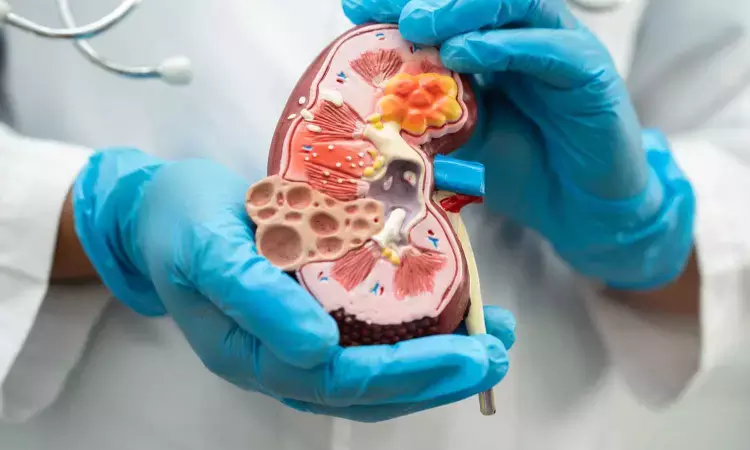
Illegal Kidney Transplant


USA: A phase 2a pilot trial evaluating dual costimulatory blockade with dazodalibep plus belatacept suggests this approach may improve immunosuppression adherence and offer a non-calcineurin alternative for kidney transplant recipients. Notably, this first-in-human study of dual costimulation blockade found that a significant proportion of patients required no daily oral immunosuppressive medications for up to one year.
The findings, published in the American Journal of Transplantation, come from a proof-of-concept study led by Flavio Vincenti from the Departments of Medicine and Surgery at the University of California, San Francisco, and colleagues. The trial explored whether combining two biologic agents—dazodalibep, a CD154 (CD40 ligand)-targeting fusion protein, and belatacept, which blocks CD80/86—could serve as the sole maintenance immunosuppressive regimen in adult recipients of a first kidney transplant from either living or deceased donors.
Conventional post-transplant immunosuppression typically relies on daily calcineurin inhibitors and corticosteroids. While effective, these agents act on broad metabolic pathways and are associated with significant long-term toxicities. The investigators aimed to evaluate a more targeted strategy that interrupts T-cell costimulation pathways central to graft rejection, potentially reducing toxicity and improving adherence by eliminating the need for daily oral medications.
The open-label, single-arm trial enrolled 23 participants who received at least one dose of the study drugs. The primary endpoint was a composite measure of efficacy failure at 24 weeks, defined as treated biopsy-proven acute rejection of grade 1A or higher, graft loss, or death. Secondary endpoints included individual efficacy outcomes at 12, 24, and 48 weeks, along with safety assessments.
The researchers reported the following findings:
- Of the 20 patients who received the revised dosing regimen and were evaluable for efficacy, 5 (25%) developed treated biopsy-proven acute rejection.
- No cases of antibody-mediated rejection were observed during the study.
- Kidney function during the first 24 weeks remained similar between patients who experienced rejection and those who did not.
- Overall, 13 out of 23 treated participants (56.5%) completed the full study period.
- Nearly all patients (96%) reported at least one treatment-emergent adverse event.
- No thrombotic events were recorded.
- The prespecified composite primary efficacy endpoint was not achieved among those who completed the study.
- Despite this, the dual biologic regimen was generally well tolerated and showed acceptable safety as a sole maintenance immunosuppressive therapy.
The authors noted limitations such as the small sample size and a stringent efficacy benchmark. As an early-phase study of a novel immunomodulatory approach, experience with dosing and monitoring was still evolving.
However, this is the first clinical trial to assess dual costimulation blockade in organ transplantation. The findings indicate that a biologic-only maintenance regimen may reduce dependence on calcineurin inhibitors and daily oral immunosuppressants. Larger trials are required to confirm efficacy, optimize dosing, and refine patient selection before broader clinical adoption.
Reference:
Vincenti F, Shoji J, Wojciechowski D, Kim J, Xu W, Wilson TM, Kirk AD. Dual costimulation blockade with the CD154-specific fusion protein dazodalibep and belatacept for prophylaxis of kidney allograft rejection. Am J Transplant. 2026 Feb 3:S1600-6135(26)00003-1. doi: 10.1016/j.ajt.2025.12.290. Epub ahead of print. PMID: 41638945.

Next Story