
- Home
- Medical news & Guidelines
- Anesthesiology
- Cardiology and CTVS
- Critical Care
- Dentistry
- Dermatology
- Diabetes and Endocrinology
- ENT
- Gastroenterology
- Medicine
- Nephrology
- Neurology
- Obstretics-Gynaecology
- Oncology
- Ophthalmology
- Orthopaedics
- Pediatrics-Neonatology
- Psychiatry
- Pulmonology
- Radiology
- Surgery
- Urology
- Laboratory Medicine
- Diet
- Nursing
- Paramedical
- Physiotherapy
- Health news
- Fact Check
- Bone Health Fact Check
- Brain Health Fact Check
- Cancer Related Fact Check
- Child Care Fact Check
- Dental and oral health fact check
- Diabetes and metabolic health fact check
- Diet and Nutrition Fact Check
- Eye and ENT Care Fact Check
- Fitness fact check
- Gut health fact check
- Heart health fact check
- Kidney health fact check
- Medical education fact check
- Men's health fact check
- Respiratory fact check
- Skin and hair care fact check
- Vaccine and Immunization fact check
- Women's health fact check
- AYUSH
- State News
- Andaman and Nicobar Islands
- Andhra Pradesh
- Arunachal Pradesh
- Assam
- Bihar
- Chandigarh
- Chattisgarh
- Dadra and Nagar Haveli
- Daman and Diu
- Delhi
- Goa
- Gujarat
- Haryana
- Himachal Pradesh
- Jammu & Kashmir
- Jharkhand
- Karnataka
- Kerala
- Ladakh
- Lakshadweep
- Madhya Pradesh
- Maharashtra
- Manipur
- Meghalaya
- Mizoram
- Nagaland
- Odisha
- Puducherry
- Punjab
- Rajasthan
- Sikkim
- Tamil Nadu
- Telangana
- Tripura
- Uttar Pradesh
- Uttrakhand
- West Bengal
- Medical Education
- Industry
Study Explores link between hearing loss and cognitive decline
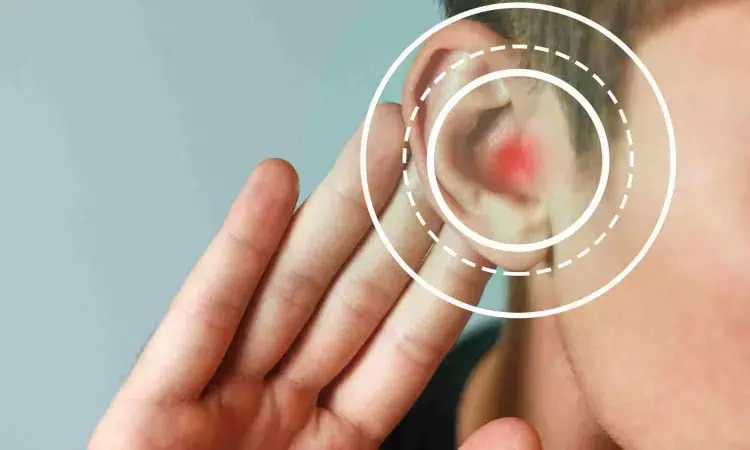
Presbycusis is a prevalent form of age-related hearing loss that also hinders speech recognition. While scientists have linked hearing loss to an increased risk of cognitive decline, the biological “bridge” between the two has remained unclear. New from eNeuro, researchers at Tiangong University and Shandong Provincial Hospital, led by Ning Li, explored the link between these symptoms in people.
The researchers identified a specific neurobiological link between hearing loss and cognitive decline called the Functional-Structural Ratio (FSR). They found that the putamen and fusiform gyrus (involved in processing sound and speech) and the precuneus and medial superior frontal gyrus (involved in memory and decision-making) become less connected to functional brain networks in those with presbycusis. These reduced connections to networks were directly associated with worse hearing thresholds and poorer performance on memory and executive function tests.
According to the authors, these findings suggest that hearing loss involves a coordinated decline in both brain structure and function, which may contribute to the symptoms of the disorder. Says Li, “The most important takeaway is that preserving hearing health may protect brain integrity. Because changes in the FSR correlate with both hearing loss and cognitive decline, this ratio could eventually serve as a biomarker—a tool for doctors to identify who is at the highest risk for dementia simply by looking at their brain scans.”
Reference:
Xiaojie Li, Weilong Fu, Yao Wang, Yuting Gao, Jinhai Wang, Jing Yang, Longji Xu, Fei Gao, Xiao Li and Ning Li, Functional-structural coupling: brain reorganization in presbycusis is related to cognitive impairment, eNeuro, https://doi.org/10.1523/ENEURO.0294-25.2026

Dr Kamal Kant Kohli-MBBS, DTCD- a chest specialist with more than 30 years of practice and a flair for writing clinical articles, Dr Kamal Kant Kohli joined Medical Dialogues as a Chief Editor of Medical News. Besides writing articles, as an editor, he proofreads and verifies all the medical content published on Medical Dialogues including those coming from journals, studies,medical conferences,guidelines etc. Email: drkohli@medicaldialogues.in. Contact no. 011-43720751

