
Interleukin-36 as a Novel Therapeutic Target for Atherosclerosis Pathogenesis: Curr. Probl. Cardiol., 2025 Review Highlights
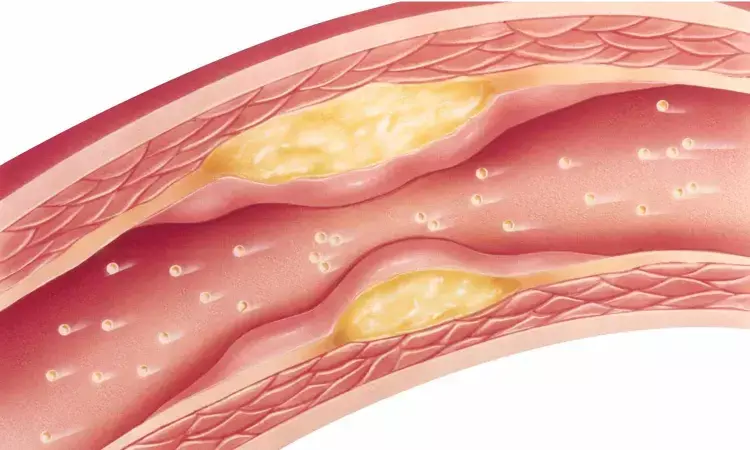


A recent review identifies interleukin-36 (IL-36) as a transformative driver of vascular inflammation, revealing that serum concentrations in patients with coronary artery disease (CAD) are significantly elevated and correlate directly with the severity of coronary stenosis. Type 2 Diabetes Mellitus (T2DM) and obesity were identified as the primary metabolic comorbidities associated with this cytokine dysregulation. Pro-inflammatory signaling via the IL-36 receptor predominated, followed by the activation of neutrophil extracellular traps (NETs).
These findings were published online in September 2025, in the journal Current Problems in Cardiology.
The Pathological Foundation of Atherosclerotic Cardiovascular Disease
Cardiovascular diseases (CVD) remain the primary contributor to global disability and premature mortality, with more than 17 million deaths annually. Atherosclerosis, a chronic inflammatory condition of the vascular wall, is widely acknowledged as the pathological foundation for most CVD, including myocardial infarction and stroke. While statins have significantly improved patient outcomes, a substantial residual risk persists, necessitating the identification of new molecular targets to prevent plaque progression. The comprehensive review synthesizes recent progress on the regulatory roles and signaling mechanisms of IL-36, a member of the Interleukin-1 (IL-1) family, in the pathogenesis of Atherosclerotic Cardiovascular Disease (ASCVD).
Review Overview
The analysis details how the IL-36 subfamily, consisting of three proinflammatory agonists—IL-36α, IL-36β, and IL-36γ—alongside an inhibitory receptor antagonist (IL-36Ra), facilitates atherogenesis through multiple biological pathways. The review explores how IL-36 binds to the membrane-bound IL-36R and recruits the IL-1 Receptor Accessory Protein (IL1RAP) to activate MyD88-dependent Nuclear Factor-kappa B (NF-κB) and Mitogen-Activated Protein Kinase (MAPK) pathways. This signaling cascade actively drives the initiation and progression of atherosclerotic lesions by modulating immune cell phenotypes and vascular health.
The key findings from the review include:
IL-36 promotes vascular inflammation by upregulating adhesion molecules like Intercellular Adhesion Molecule-1 (ICAM-1) and Vascular Cell Adhesion Molecule-1 (VCAM-1), which facilitate leukocyte recruitment to the arterial wall.
It accelerates macrophage foam cell formation by activating the Phosphoinositide 3-Kinase (PI3K) pathway, leading to the upregulation of the scavenger receptor CD36 and increased cholesterol uptake.
IL-36 signaling promotes the release of NETs—chromatin fibers that exacerbate vascular injury—and drives pathological angiogenesis by enhancing Vascular Endothelial Growth Factor (VEGF) signaling.
The cytokine serves as a potent inducer of autophagy in macrophages, which may contribute to necrotic core formation and plaque instability.
Clinical Relevance and Targeted Prevention
For practicing clinicians, this review underscores that IL-36 is not merely a biomarker but a mechanistic driver of atherosclerotic progression. Direct inhibition of IL-36R or blockade of the IL1RAP co-receptor has shown promise in reducing plaque burden and leukocyte infiltration in experimental models. Notably, the anti-IL-36R monoclonal antibody spesolimab is already under clinical evaluation for other inflammatory conditions, suggesting a potential pathway for translating these findings into cardiovascular care. However, its context-dependent functions, including possible sex-dependent protective effects, require further clarification through rigorous clinical trials.
Reference
Tan S, Li Y, Yao Z, et al. Interleukin-36: a novel therapeutic target for atherosclerosis. Current Problems in Cardiology. 2025 Sep 28